
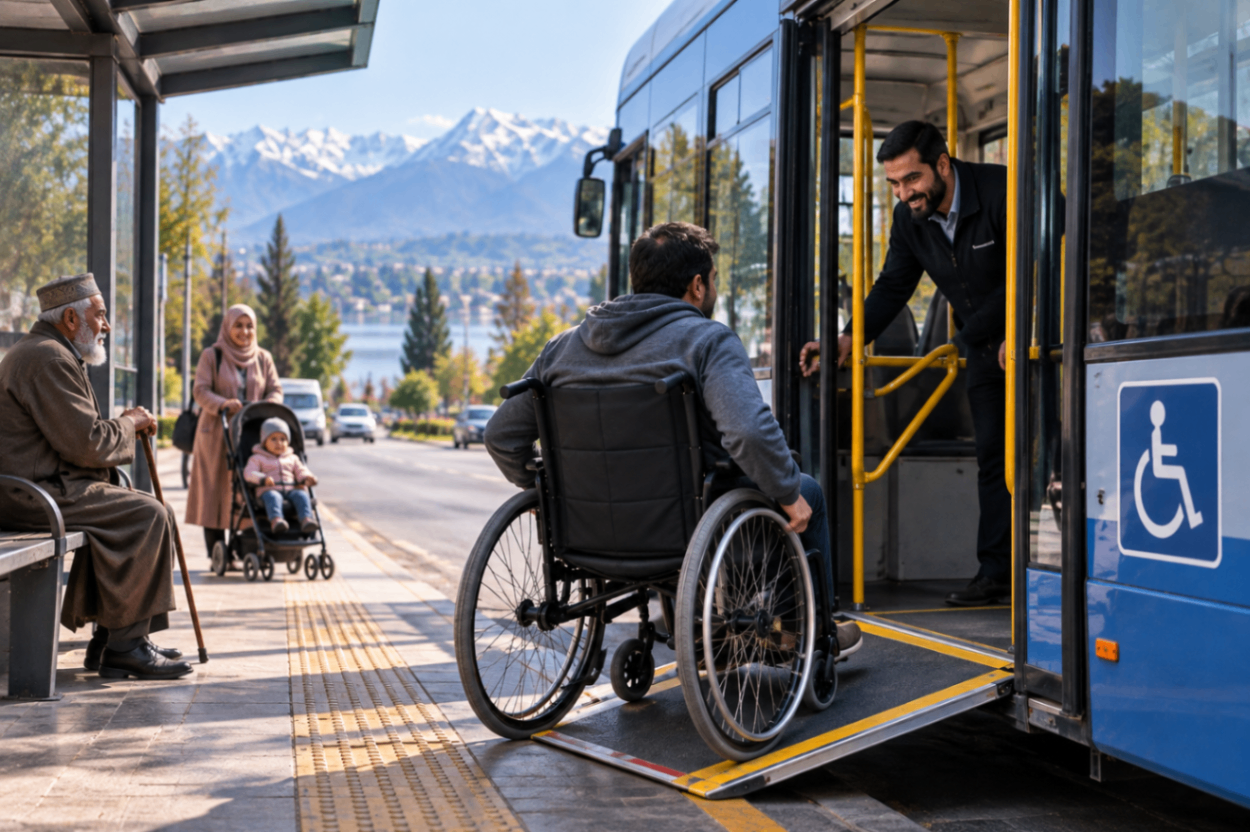
For many people, the announcement of free or subsidised public transport can bring a sense of relief. For a person with a disability, affordable transport can certainly make travelling easier and reduce one of the financial barriers to getting out and about.
But there is another part of the journey that is sometimes less visible.
Getting onto a bus is only one step. What happens before boarding, and what happens after reaching the destination, can be equally important.
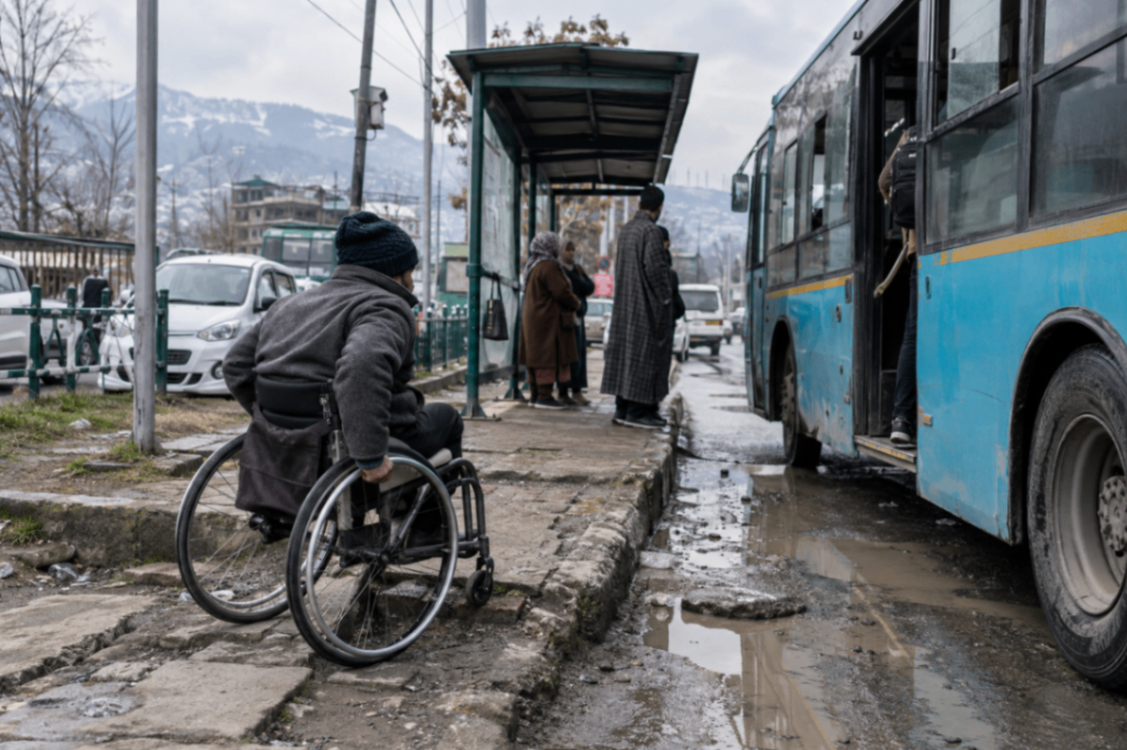
Imagine a person who uses a wheelchair wanting to visit a hospital, a bank, a government office or simply a public park. They may have access to free transport, but reaching the bus stop could still be difficult because of an uneven pavement or a high kerb. The vehicle may be accessible, but the building at the other end may have steps instead of a ramp. There may be no accessible toilet, no clear signage, or no easy way to move around independently.
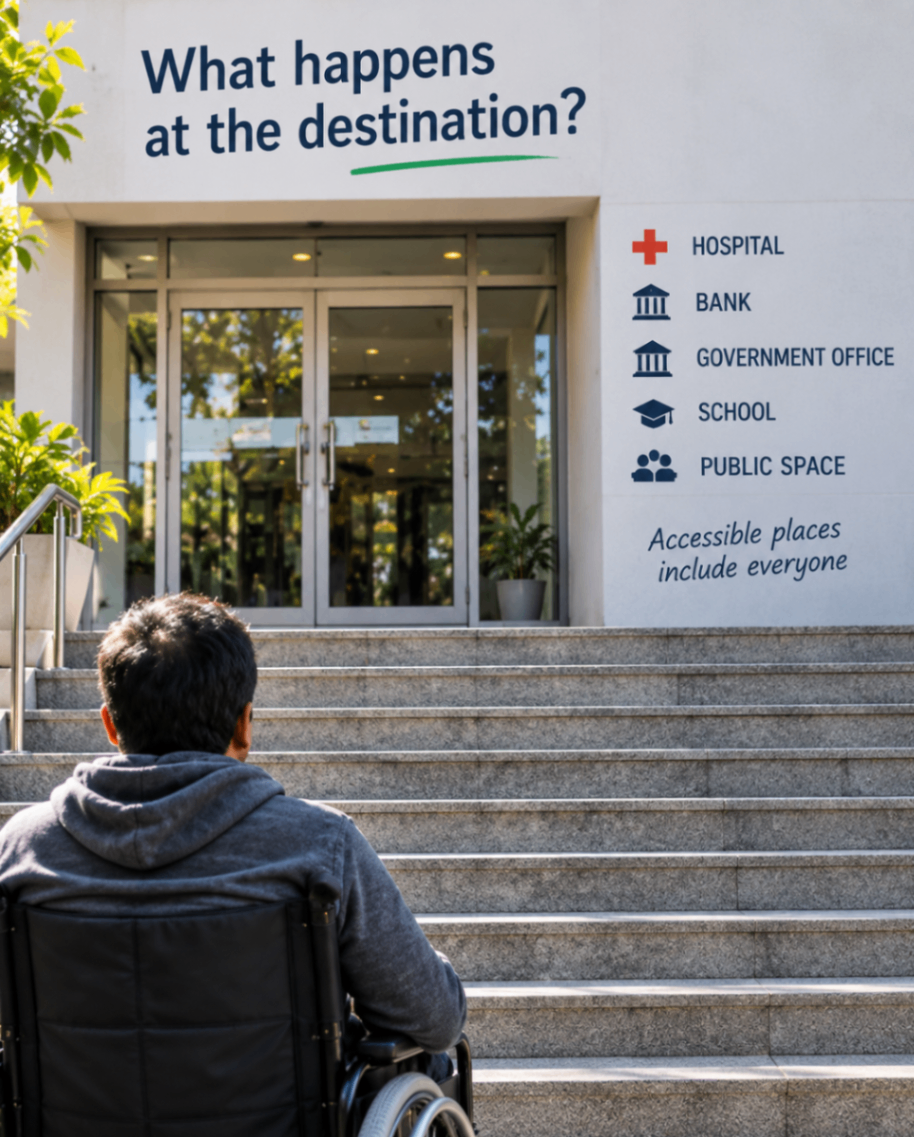
In such situations, transport has helped with one part of the journey, but other barriers remain.
This is why accessibility is best understood as a complete journey rather than a single service.
A person needs to be able to leave their home, reach the road safely, access transport, travel comfortably, get off at the destination and enter and move around the place they have come to visit. Each part matters.
For someone who does not experience these barriers, they can be easy to overlook. We usually think about transport as the vehicle that takes us somewhere. But for a person with a disability, the journey begins much earlier and continues long after getting off the bus.
This does not make free transport unimportant. It simply reminds us that affordability and accessibility are two different, but connected, needs.
A transport service can be affordable and still be difficult to use. A public building can provide an important service and still have physical barriers. A beautifully designed public space can remain difficult to enjoy if the route leading to it is inaccessible.
The aim, therefore, could be to look at the whole experience.
Can people reach the transport stop?
Can they board safely?
Can they travel with dignity?
Can they get off without assistance when possible?
Can they enter the destination?
Can they use the facilities?
Can they return home just as easily?
These questions are not only about disability. They also matter to older people, people recovering from injuries, parents with young children and anyone whose mobility may temporarily or permanently be limited.
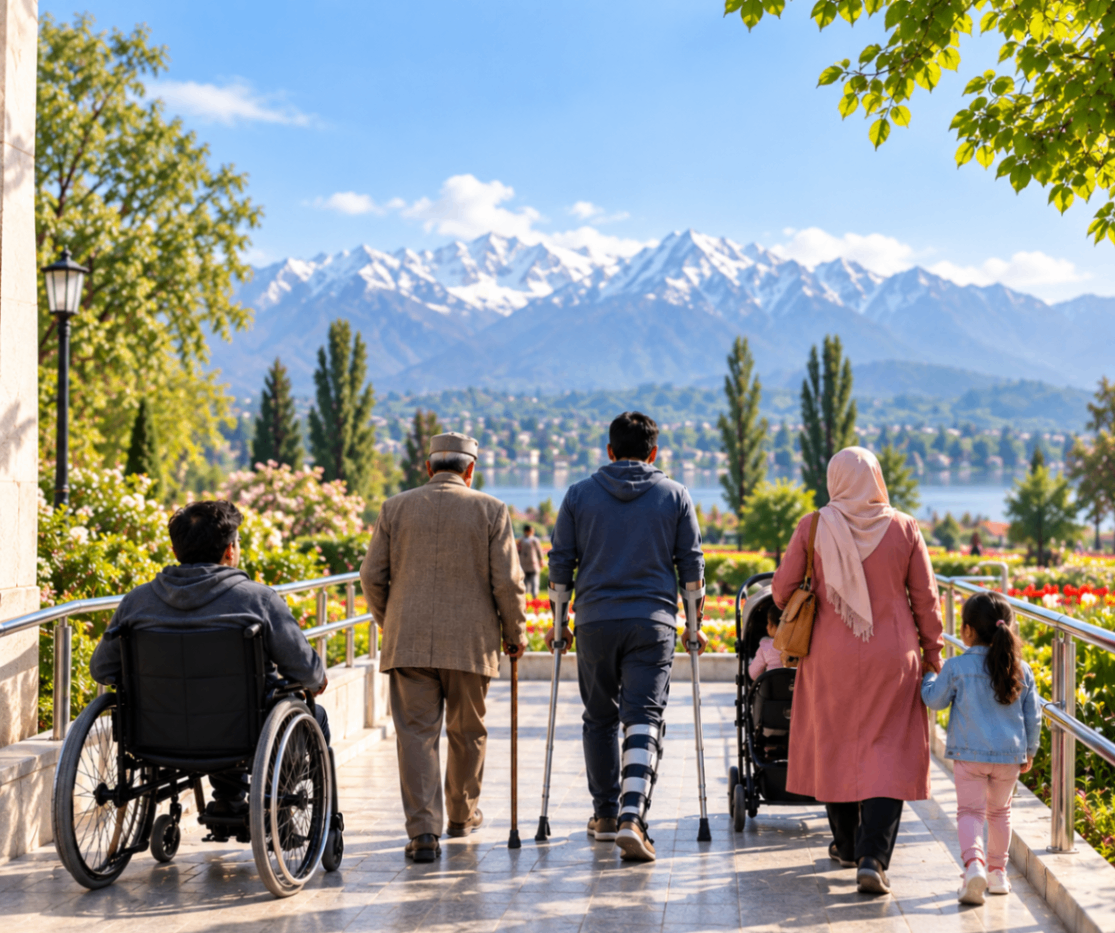
Perhaps this is where the conversation about free transport can become an opportunity to think more broadly about accessible communities.
Transport, footpaths, crossings, buildings, toilets, information and public spaces all form part of the same environment. When these elements work together, people have greater freedom to participate in everyday life.
And there is an important place for people with disabilities in this conversation. Their experiences can help us understand where the barriers actually are and what practical changes would make a difference.
Sometimes accessibility does not require something complicated. It may be a smoother pathway, a properly designed ramp, a safer crossing, a wider doorway, accessible information or simply ensuring that a facility is maintained and usable.
At RehabNation Healthcare Foundation of India, we believe rehabilitation is not only about helping a person improve their physical abilities. It is also about creating environments where those abilities can be used with confidence and independence.
A person may become more mobile, but mobility has greater meaning when there are places they can actually reach and use.
Free transport can help make a journey possible. Accessibility helps make the destination possible.
Perhaps the real goal is not to choose between the two, but to work towards both—so that every person can travel, participate and experience their community with greater independence, comfort and dignity.
Because inclusion is not only about reaching a place.
It is also about being able to be there.